
User roles and permissions
Gain gives everyone in your approval process a role. The role decides what each person can do with your content, whether that's marketing files, text docs, web pages or social posts. This guide explains each role and how to invite and manage people in your account.
Jump ahead
- Roles and permissions overview
- Managing people in your account
- Inviting Team Members and Clients or stakeholders
- Optional for Clients: connecting social accounts to Gain
- Transferring ownership of the account
Roles and permissions overview
There are two kinds of roles in Gain: Team Members, who create and manage content, and Clients, who review and approve it.
Team Members
Team Members are the people who create, edit, manage and publish content in Gain. They might be marketing managers, content creators, designers, social media managers or account managers.
In the table below, "content" means every type of content in Gain: files, text docs, web pages added with Embed, and social posts. Scheduling and publishing only apply to social posts.
| Role | Permissions |
|---|---|
| Contributor | Can create and edit content, send content for approval and approve content. Can't schedule or publish social posts. A good fit for freelancers, consultants or anyone who creates content but shouldn't publish it. |
| Publisher | Can do everything a Contributor can, plus schedule and publish social posts. |
| Workspace Admin | Can do everything a Publisher can, plus create new workspaces, manage the workspaces they've been given access to and connect social channels to them. |
| Account Admins | Can do everything a Workspace Admin can, in every workspace in the account. |
| Account Owner | Can do everything an Account Admin can, plus add and remove users and manage billing. |
Clients or stakeholders
Give the Client role to the people who review and approve your content but don't create or edit it. They can be inside or outside your company. For an in-house team, that's usually brand, legal or leadership. For an agency, it's usually your clients.
| Role | Permission |
|---|---|
| Clients | Can give feedback on and approve the content sent to them. Can see content with a publish date in their calendar, along with whether it's pending their approval or has been approved, scheduled or published. Can connect social media accounts, but only if you give them permission. |
💡 Tip: If a colleague reviews content and also needs to create or edit it, make them a Team Member instead. Team Members (even Contributors) can approve content too.
Managing people in your account
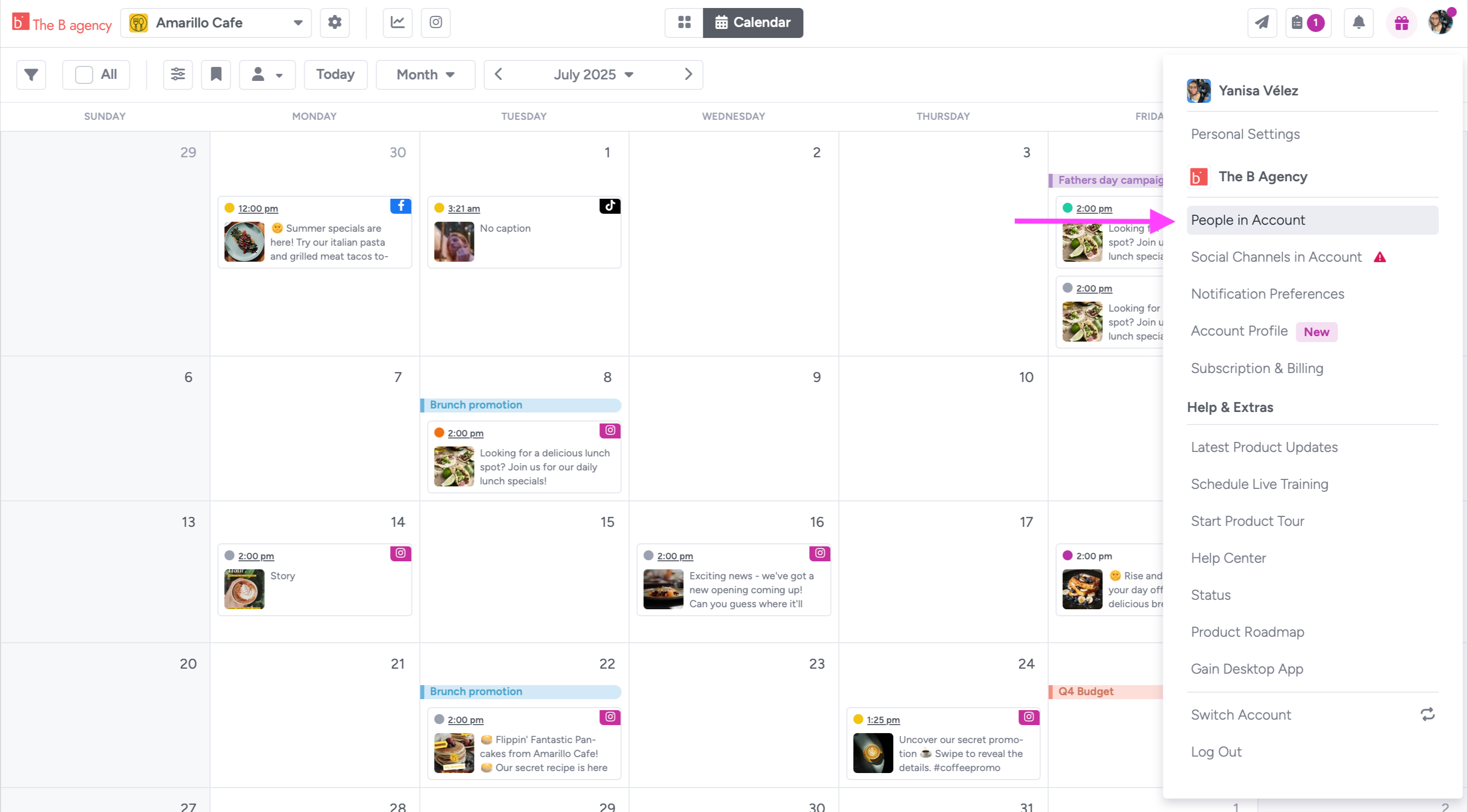
From the Personal Settings menu, choose People in Account.
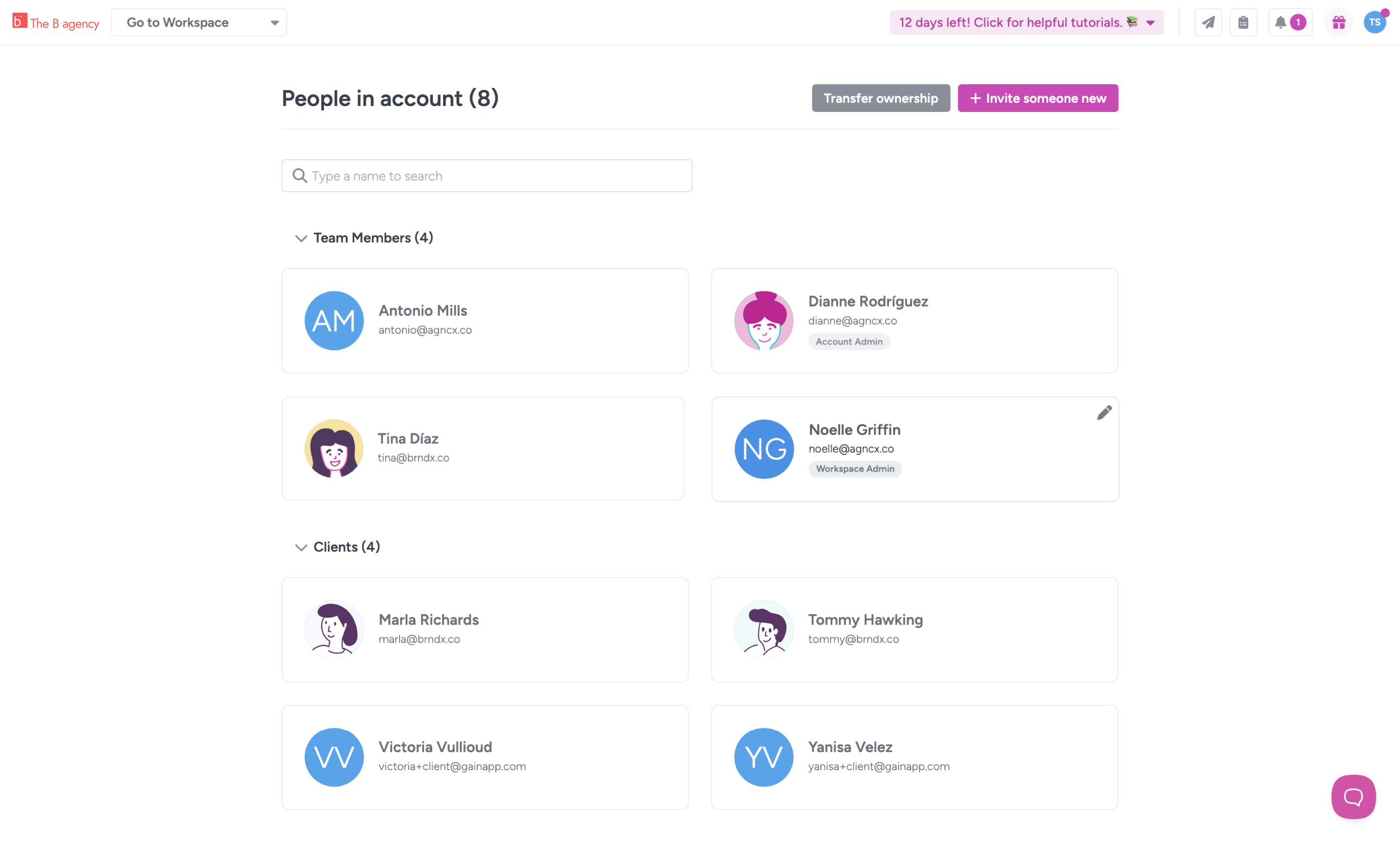
On the People in Account page, you can add or remove users, assign and change user roles, and transfer ownership of the account.
Inviting Team Members and Clients or stakeholders
On the People in Account page:
- Click on + Invite someone new.
- Add the person's name and email address.
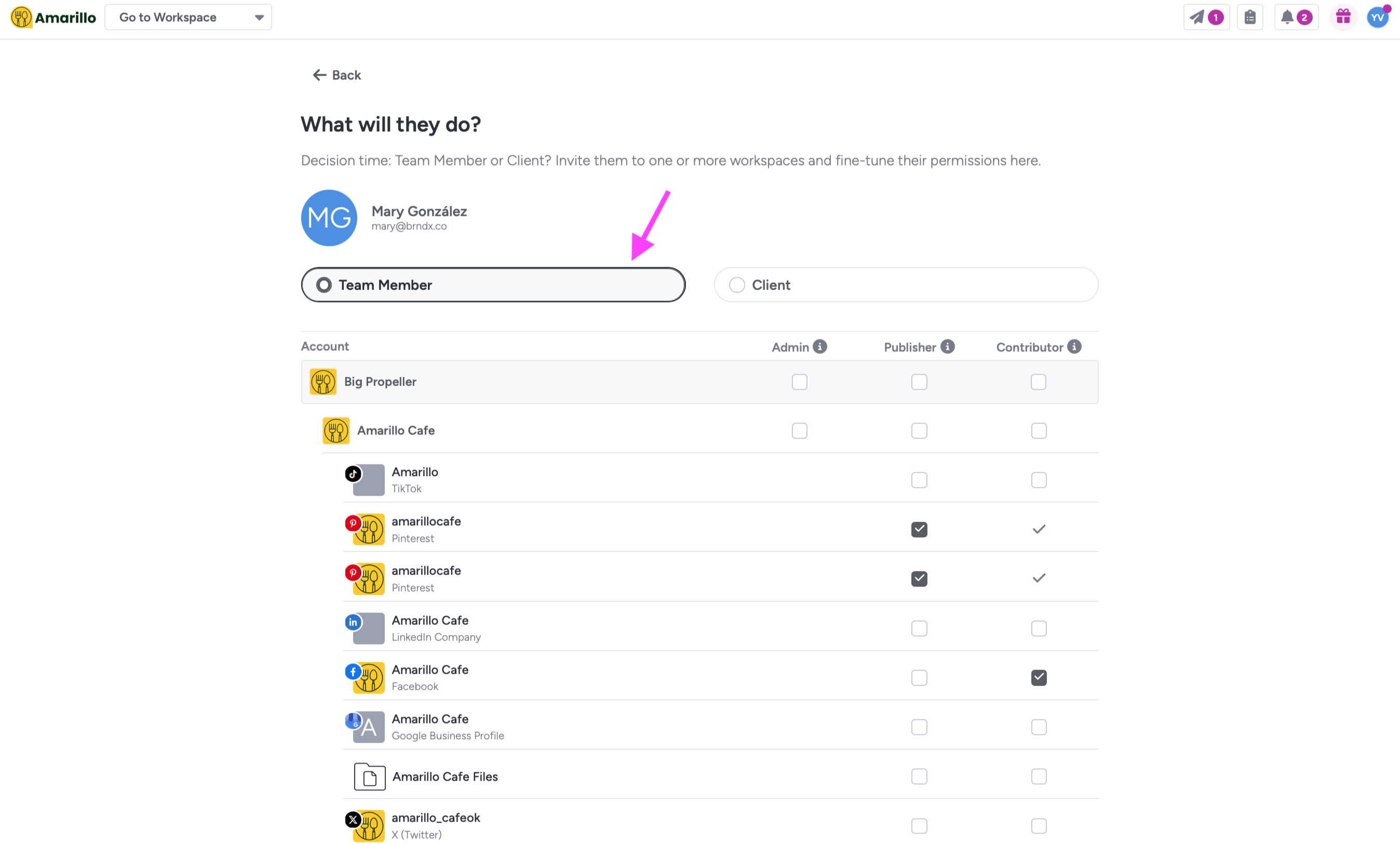
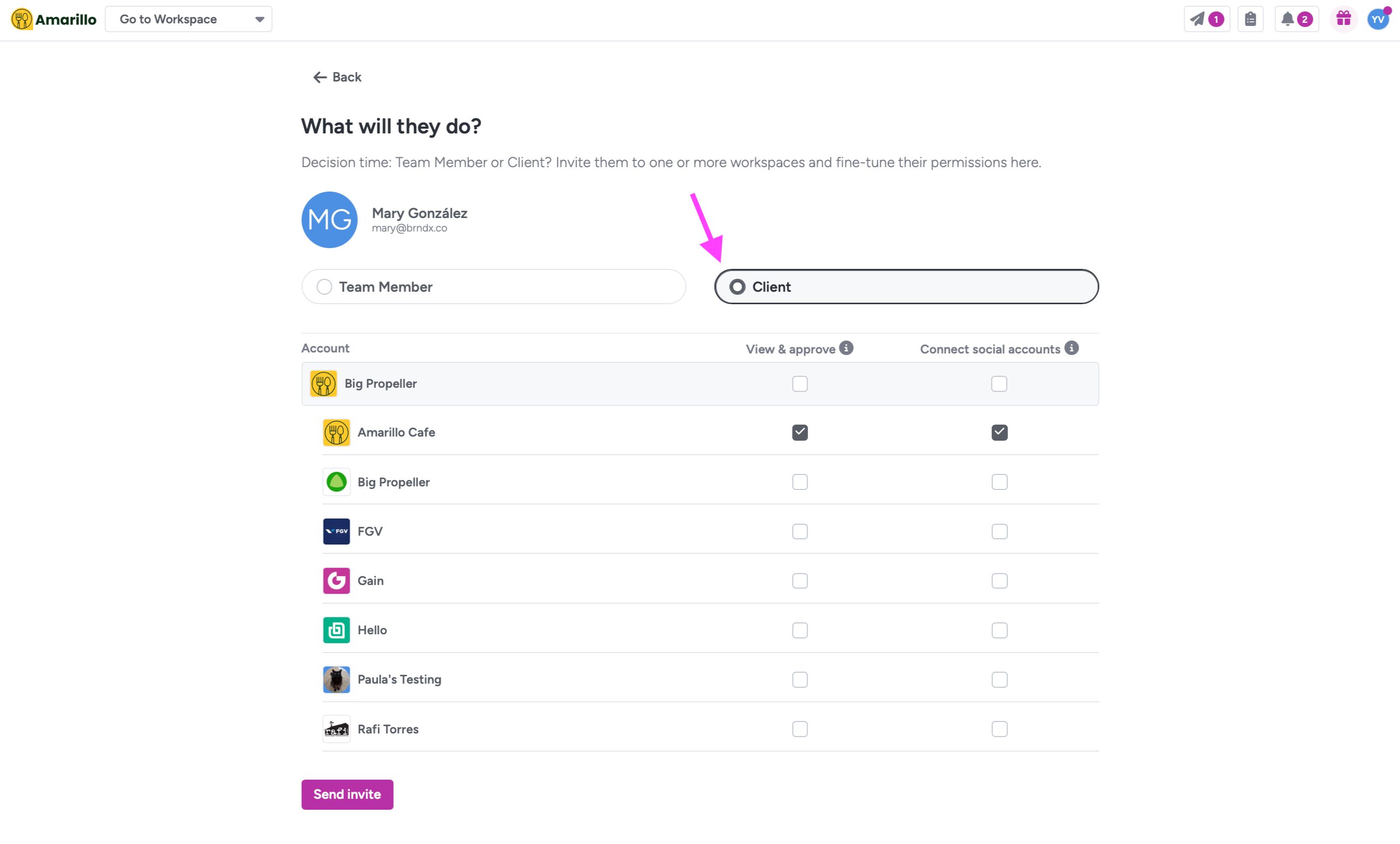
- Choose their role by clicking Team Member (Contributor, Publisher or Admin) or Client. You can assign the role at the account level, to give them access to every workspace, or only for the workspaces you choose.
- Click Send invite at the bottom of the page.
You can come back to this page at any time to change someone's role or permissions.
Optional for Clients: Connecting social accounts to Gain
When you set a Client's permissions in People in Account, you can let them connect social accounts to Gain. Check the box next to the account or workspaces you want them to be able to connect social accounts to.
You can turn this permission on or off at any time.
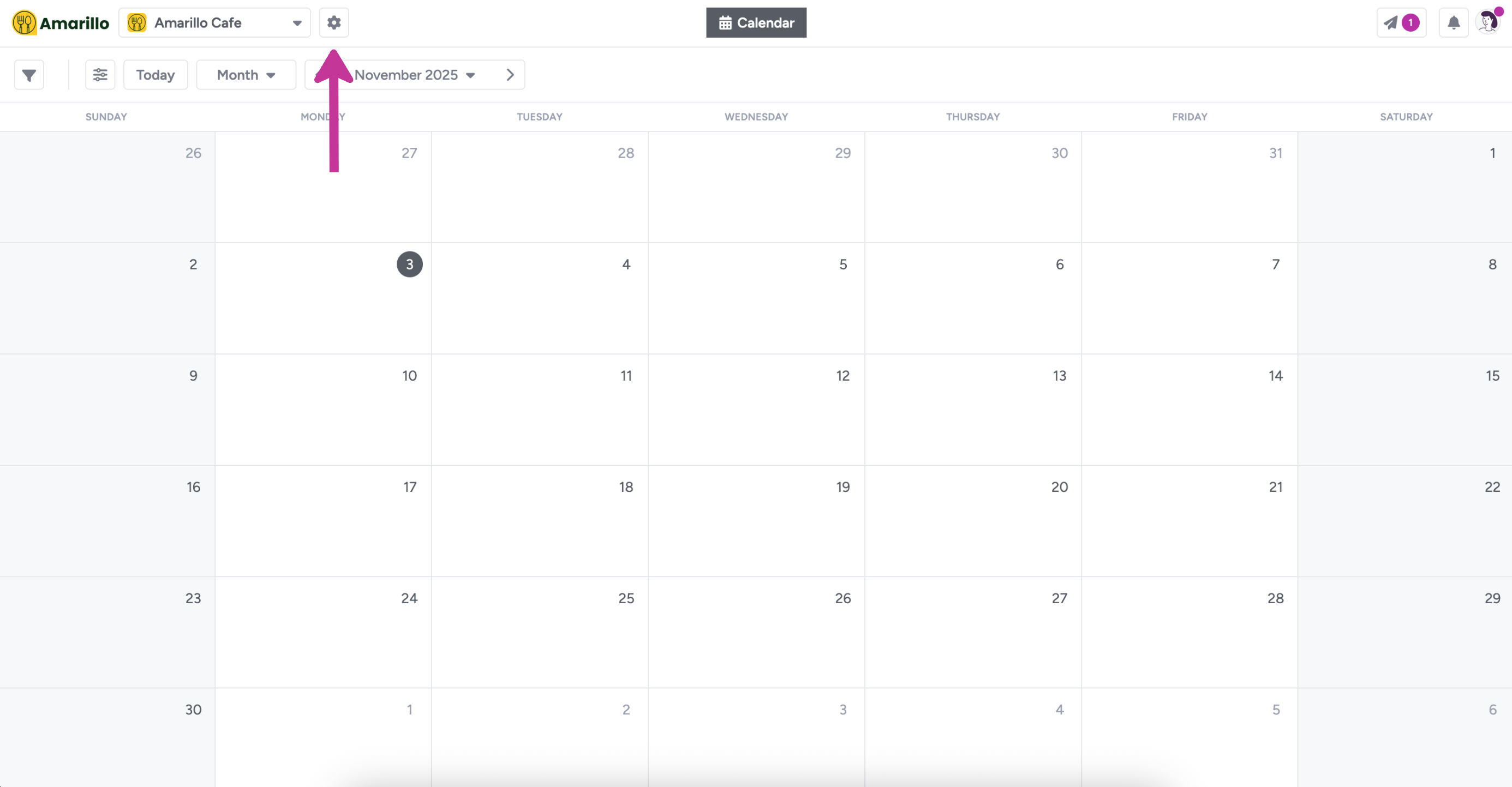
Your Client will get an email notification and a new Workspace settings (⚙️) section in their calendar, where they can connect and reconnect social channels.
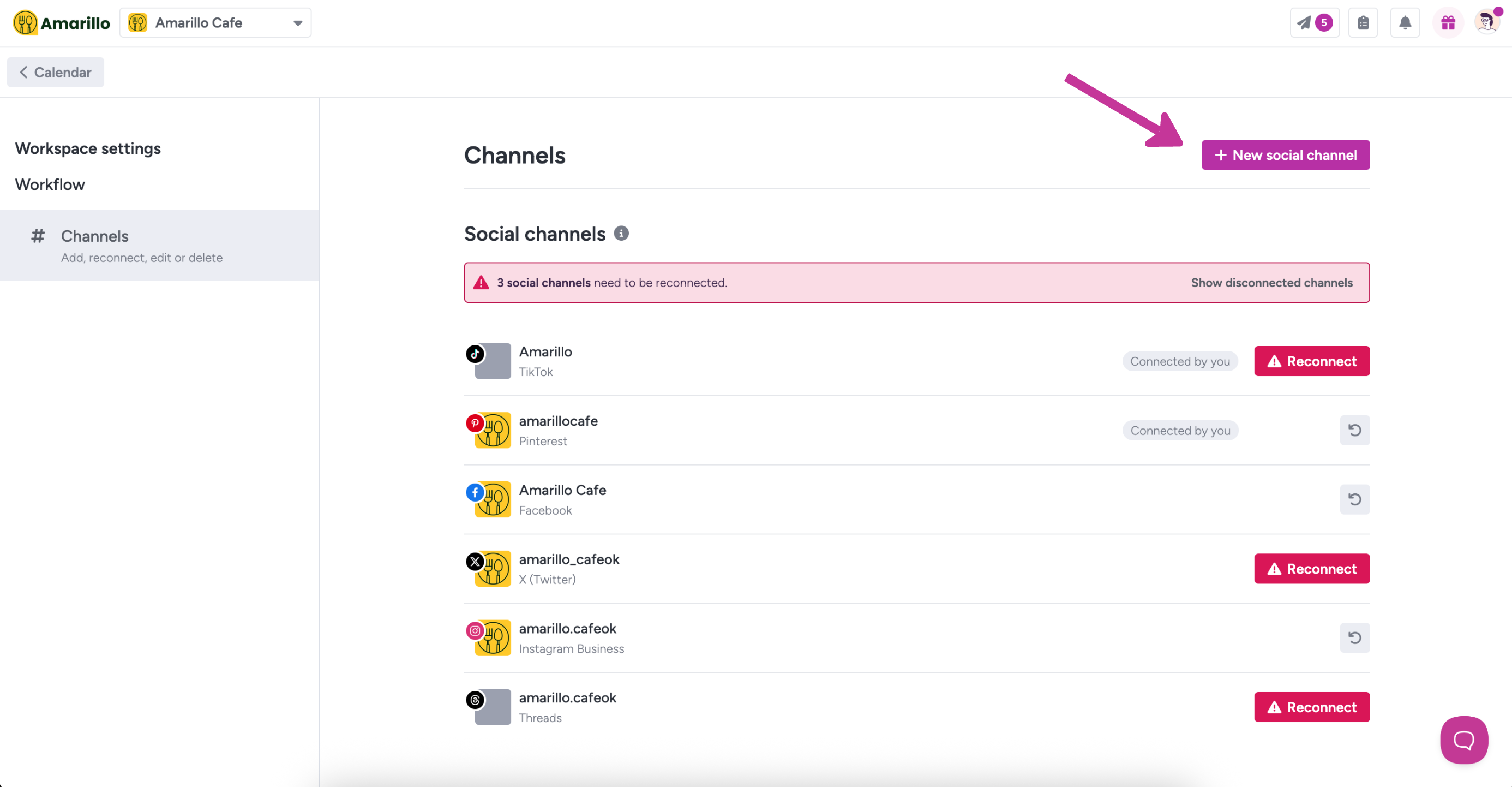
👉🏼 Share this guide with your Clients to help them connect their social accounts to Gain
Transferring ownership of the account
Only the account owner can transfer ownership of the account to another user, from the People in Account page.
- Click Transfer ownership.
- Select the new Account Owner.
- Enter your Gain password to confirm.
- Click Transfer Account Ownership.
👀 Important: Once the transfer is complete, you're no longer the Account Owner. You'll stay on as an Account Admin, but you won't be able to see or manage billing.